Cardamom sizes such as 8 mm, 7 mm and 6 mm give the minimum pod diameter, set by the sieve used for grading. Bigger pods are usually fuller and more aromatic. India's official grades are Alleppey Green Extra Bold (7 mm and above), Bold (6 mm) and Superior (5 mm). "8 mm" is a trade grade above these.
Key takeaways
- Official Indian grades: AGEB, 7 mm and above at 435 g per litre; AGB, 6 mm and above at 415 g per litre; AGS, 5 mm and above at 385 g per litre [1].
- Weight per litre (bulk density) matters as much as size, because heavy pods are full of seeds and light ones are hollow.
- For black pepper, Malabar Garbled grade 1 (MG1) is a trade grade defined mainly by a high bulk density, commonly cited at around 550 g per litre, with limits on light, immature berries.
- "Bold" and "Tellicherry" pepper mean larger berries, sieve-graded at 4.25 mm and up. Tellicherry Garbled Extra Bold (TGEB) is the premium export grade.
- Malabar Pepper and Alleppey Green Cardamom are both registered Geographical Indications [2][3].
What do cardamom sizes mean?
A cardamom size is the smallest diameter of the pods in the lot, measured by the sieve they are graded through. An "8 mm" lot has passed over a sieve that held back anything smaller than 8 mm. Size is the quickest proxy for quality, because larger, fully matured pods tend to be better filled with seeds, which is where the aroma is.
| Grade | Full name | Minimum pod size | Minimum weight per litre | Typical use |
|---|---|---|---|---|
| 8 mm (trade) | Often sold as "Super Bold" or "8 mm+" | 8 mm | Set by the seller | Gifting, whole-pod garnish, chai |
| AGEB | Alleppey Green Extra Bold | 7 mm [1] | 435 g [1] | Premium cooking, biryani, sweets |
| AGB | Alleppey Green Bold | 6 mm [1] | 415 g [1] | Everyday cooking, chai |
| AGS | Alleppey Green Superior | 5 mm [1] | 385 g [1] | Grinding, masalas, bulk use |
"8 mm" isn't one of the three official Indian grades above. It is a trade grade, so what's behind it depends on the seller. Ask for the weight per litre, or check it yourself (see below).
Is bigger cardamom always better?
No. Bigger is better for looks and usually for aroma, but you don't need it for everything.
- For whole-pod use (biryani, pulao, payasam garnish, gifting), 7 to 8 mm looks and smells best.
- For grinding into chai masala, garam masala or sweets, a smaller, cheaper grade with good weight per litre gives almost the same flavour once ground.
- Colour: deep green shows careful drying. Pale, yellowed or split pods are older or were dried badly.
What do black pepper grades like MG1, TGEB and "bold" mean?
Pepper grades describe berry size, density and cleanliness. "Garbled" means cleaned: stalks, light berries, dust and other extraneous matter have been sorted out before grading.
| Grade | What it means | Key specification |
|---|---|---|
| MG1 | Malabar Garbled, grade 1 | High bulk density, commonly cited at around 550 g per litre and up, with cleaning limits on light berries and extraneous matter |
| TGEB | Tellicherry Garbled Extra Bold | Large berries, sieve-graded at 4.25 mm and up |
| TGSEB | Tellicherry Garbled Special Extra Bold | The largest berries, 4.75 mm and up |
| Ungarbled (UG) | Not cleaned | May contain stalks, pinheads and light berries |
A note on precision: the exact moisture and light-berry percentages that define MG1 come from India's spice grading regulations. We could not load a working copy of the regulation text itself while writing this, so the figures above are kept to the range that independent trade and industry sources agree on, rather than stated to the decimal place.
"Malabar" refers to origin. Malabar Pepper is a Geographical Indication registered by the Spices Board, covering pepper from Kerala, Karnataka and Tamil Nadu [2]. "Tellicherry" refers to size: the largest berries from the same crop.
How can you check cardamom and pepper at home?
- Weigh a measured cup. Fill a 250 ml cup level with the pods or berries and weigh them. Multiply by 4 to get grams per litre. Good AGEB cardamom should come close to 435 g per litre [1], and well-graded MG1 pepper should come close to 550 g per litre.
- Try the float test for pepper. Drop a spoonful of peppercorns into water. Light, hollow berries float. A few is normal, but many means poor grading. Dry the rest straight away.
- Crack a cardamom pod. The seeds should be black-brown, sticky and strongly aromatic. Brown, dry or sparse seeds mean old or immature pods.
- Rub and smell. Good pepper smells sharp and slightly citrusy when crushed. Musty or dusty smells mean old stock.
These checks tell you about quality, not purity or safety. Only a lab test can confirm adulteration or contamination.
What grades do we sell?
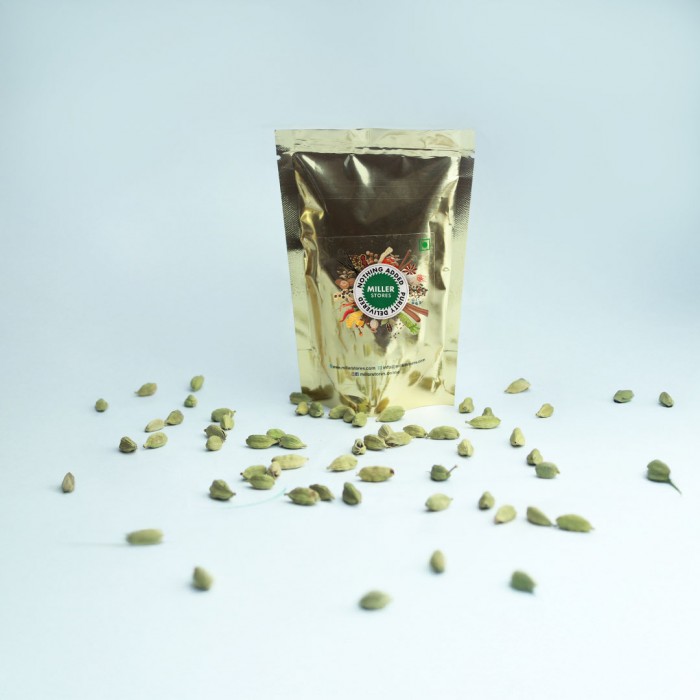
Our green cardamom is 7 to 8 mm in size, the range that suits whole-pod cooking, garnish and gifting.
Where to buy cardamom and black pepper
Buy our Green Cardamom (whole) and our Black Pepper. To put them to work, read homemade sambar powder: the ratio chart, and see our Diwali spice gift box guide if you are gifting whole spices.
Frequently asked questions
What does 8 mm cardamom mean?
8 mm cardamom means every pod in the lot is at least 8 mm across, graded by sieve. It sits above the top official Indian grade, Alleppey Green Extra Bold (7 mm and above) [1]. Because 8 mm is a trade grade, not an official one, check its weight per litre as well as its size.
Which is better, 7 mm or 8 mm cardamom?
8 mm pods are larger and look better whole, but good 7 mm (AGEB) cardamom with a high weight per litre tastes almost the same once cooked or ground. Choose 8 mm for gifting and garnish, and 7 mm for everyday cooking and value.
Is Tellicherry pepper different from Malabar pepper?
They come from the same region and crop. Malabar Pepper is the origin, a registered GI [2]. Tellicherry is a size grade: the largest berries, sieve-graded at 4.25 mm and up. So Tellicherry pepper is the bold end of the Malabar crop.
Why do some peppercorns float in water?
Floating peppercorns are light berries: immature or hollow ones with little flavour. The MG1 grade sets a limit on how many light berries a lot may contain. A few floaters are normal, but many suggest poorly graded or bulked-up pepper.
Does cardamom colour matter?
Yes. A deep, even green shows the pods were picked mature and dried carefully. Pale, yellow or brownish pods have usually been stored too long or dried badly. They have lost aroma, but they are not unsafe.
Last updated 30 September 2026.
Sources
- UGC e-PG Pathshala (INFLIBNET), Food Technology. Technology of Spices and Condiments, Module 18: Cardamom Grading. Standard export grades AGEB/AGB/AGS with sieve size and weight-per-litre specifications. epgp.inflibnet.ac.in
- Geographical Indications Registry, Government of India. Malabar Pepper, application no. 49, status Registered. search.ipindia.gov.in
- Geographical Indications Registry, Government of India. Alleppey Green Cardamom, application no. 72, status Registered. search.ipindia.gov.in