Ground chilli, turmeric and coriander powder don't share one shelf life. Freshly milled, kept airtight and in the dark, chilli and coriander hold full aroma for about three to four months and turmeric for four to six — after that they're not unsafe, just flatter. Mould or damp caking is the only real reason to throw a jar away.
- Ground fades faster than whole. Grinding exposes far more surface area to air, light and heat, so the volatile oils and pigments that carry aroma and colour break down sooner than in the whole spice.
- Published ranges vary a lot. University extension guidance for shelf-stable, factory-packed ground spice runs from about two to four years for "still flavourful enough to use" — but that is a very different clock from a freshly milled powder with no preservatives.
- Freshly milled starts the clock at zero. Because our chilli, turmeric and coriander powders are ground the day you buy them, we tell customers to treat them as closer to the shorter end: roughly three to four months for chilli and coriander, four to six for turmeric.
- Colour and aroma don't fade at the same rate. Turmeric's colour outlasts its aroma by a wide margin; a jar that still looks vivid orange can already taste of very little.
- "Stale" is not "unsafe." Old spice powder mostly just tastes weaker. Visible mould, damp caking or a musty smell are the actual warning signs — not the calendar.
Why ground spice fades faster than whole
A whole dried chilli pod, turmeric rhizome or coriander seed keeps its aromatic oils and pigments locked inside a comparatively small, intact surface. Grinding breaks that open. The powder that results has vastly more surface area exposed to oxygen, light and ambient heat, and grinding itself generates friction heat that drives off some of the volatile oil on the spot — losses of 37% for nutmeg, 14% for mace and 17% for cinnamon have been measured during ordinary grinding, purely from the heat of the process, which is why low-temperature "cryogenic" grinding exists as an alternative [1].
This is also why the commonly cited shelf-life ranges for spices split so clearly into two bands. University extension guidance from Texas A&M AgriLife puts whole spices at three to four years and ground spices — its own example is chilli powder — at two to four years, while separate guidance from the University of Florida's IFAS extension service puts ground spices such as paprika at two to three years and whole spices at up to five [2][3]. Both are talking about factory-ground, commercially sealed spice sitting in a pantry; both agree ground loses the race to whole.
Shelf life of chilli, turmeric and coriander powder
The table below separates three things that often get blurred together: the wide range you'll see quoted for shelf-stable, factory-packed ground spice in general; what a specific peer-reviewed storage trial found for that spice; and what we tell our own customers about a powder that was milled to order rather than pre-ground and warehoused. Where sources disagree, that's shown rather than flattened into one number.
| Spice powder | Our guidance (freshly milled) | Commonly cited range, ground (packaged) | Commonly cited range, whole | What actually fades |
|---|---|---|---|---|
| Chilli powder | 3–4 months for full aroma | 2–4 years [2] | 3–4 years generally [2]; a dedicated 24-month trial on whole dried chilli found capsaicin measurably declining from month 6 onward at room temperature [4] | Colour (carotenoids) and heat (capsaicinoids) fade together — the same trial recorded up to 25% pungency loss by 6 months and around 89% colour loss by 24 months in ordinary (non-vacuum) storage [4] |
| Turmeric powder | 4–6 months for full aroma; colour lasts longer | 2–4 years [2][3] | 3–4 years generally [2] | Curcumin and oleoresin content, shown falling with storage time in an ICAR trial; that trial found powder held up without significant deterioration for only about 3 months at ambient temperature (6 months refrigerated) [5] |
| Coriander powder | 3–4 months for full aroma | 2–4 years [2] | 3–4 years generally [2] | Its volatile citrus-floral oil — the same grinding-heat mechanism documented for other ground spices applies here too [1] |
Read the "commonly cited" columns as an upper bound for sealed, shop-bought powder rather than a promise. The gap between those figures and our own three-to-six-month guidance is real, and it comes down to one thing: those ranges describe powder that was ground in a factory, packed with the rest of a production run, and may already have sat in a warehouse before it reached a shelf. Milled to order, the clock starts on the day you buy it.
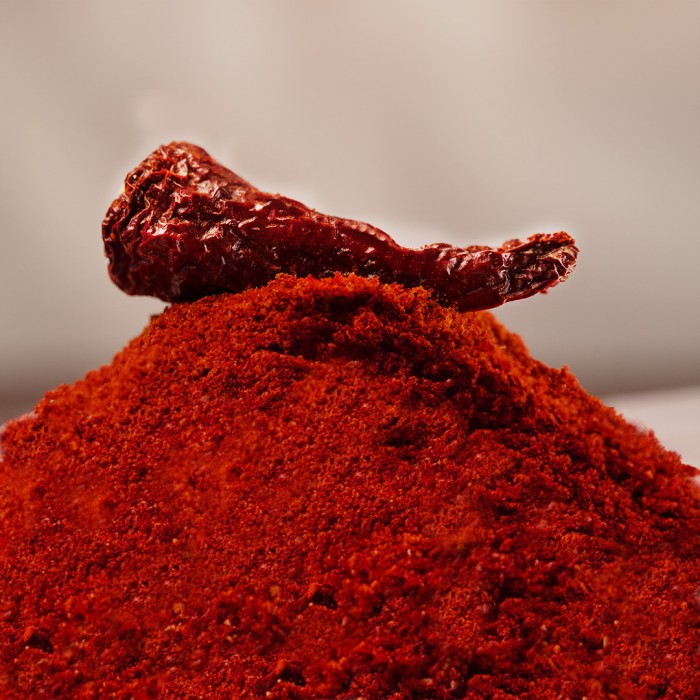
Does old spice powder become unsafe, or just bland?
Mostly just bland. Past its peak-aroma window, ground chilli, turmeric or coriander doesn't spoil the way milk or meat does — it loses potency, so the same spoonful tastes weaker, which is how people end up over-seasoning without noticing why. That is a quality problem, not a safety one.
The real safety risk with ground spices is moisture, not age. FSSAI's own guidance for spice processors states plainly that "spices are susceptible to mould contamination and/or growth if storage conditions are not appropriate," and that spices need to be kept in an environment where humidity won't push product moisture up to a level that supports mould [6]. That guidance sets maximum moisture limits for the raw spice itself before grinding — turmeric at 12% moisture, coriander at 9%, chillies at 11% — precisely because damp is what lets mould take hold, not the passage of time on its own [6].
In practice, that means: a spice powder that's gone flat after six months is still fine to cook with, just less aromatic. A spice powder that's caked, damp, smells musty, or shows any visible mould should be thrown out regardless of how recently it was bought. We are not qualified to tell you whether a specific jar is safe from a description alone — when in doubt, the smell-and-look test above is more reliable than the calendar, and a genuinely mouldy jar should go in the bin, not back in the masala box.
How to store ground spices for maximum freshness
- Buy only what you'll use in the window above. A smaller jar bought more often beats a large one that sits half-used for a year.
- Move it to an airtight, opaque container. The thin paper or plastic pouch spices are often sold in is not an airtight seal on its own.
- Keep it cool and dark. A cupboard away from the stove, dishwasher or a sunny windowsill is far better than an open spice rack by the hob.
- Never refrigerate ground spice. Moving a cold jar in and out of a warm kitchen condenses moisture inside it, and that dampness is exactly what invites caking and mould.
- Use a dry spoon every time. A wet or food-smeared spoon introduces moisture straight into the jar.
- Date the container when you open it. It's the only way to actually know if you're inside or outside the window for that spice.
What we do differently: milled to order, not warehoused
Every point above is really an argument for buying whole spice and having it ground close to when you'll use it, which is the whole reason our shops mill in front of the counter rather than selling pre-ground stock. You choose the whole chilli, turmeric or coriander, watch it go into the mill, and take the powder home the same day — there's no factory production run, no warehouse months, and no guessing how long a bag has already been sitting before it reached you.
That's also why the "commonly cited" ranges in the table above don't map cleanly onto our own guidance. They describe sealed, shop-bought powder of unknown age; ours starts fresh. We'd rather tell you a shorter, more honest window — three to four months for chilli and coriander, four to six for turmeric — than let you assume a freshly milled jar behaves like one that's been on a supermarket shelf.
If you're in Hyderabad, our Kondapur and Serilingampally stores mill to order six days a week; you're welcome to watch. It's also worth reading our companion post on how to spot adulterated chilli, turmeric and coriander at home, and if it's specifically chilli you're choosing between varieties, see Kashmiri vs Guntur vs Byadgi chilli: which to use when.
Where to buy freshly milled chilli, turmeric and coriander powder
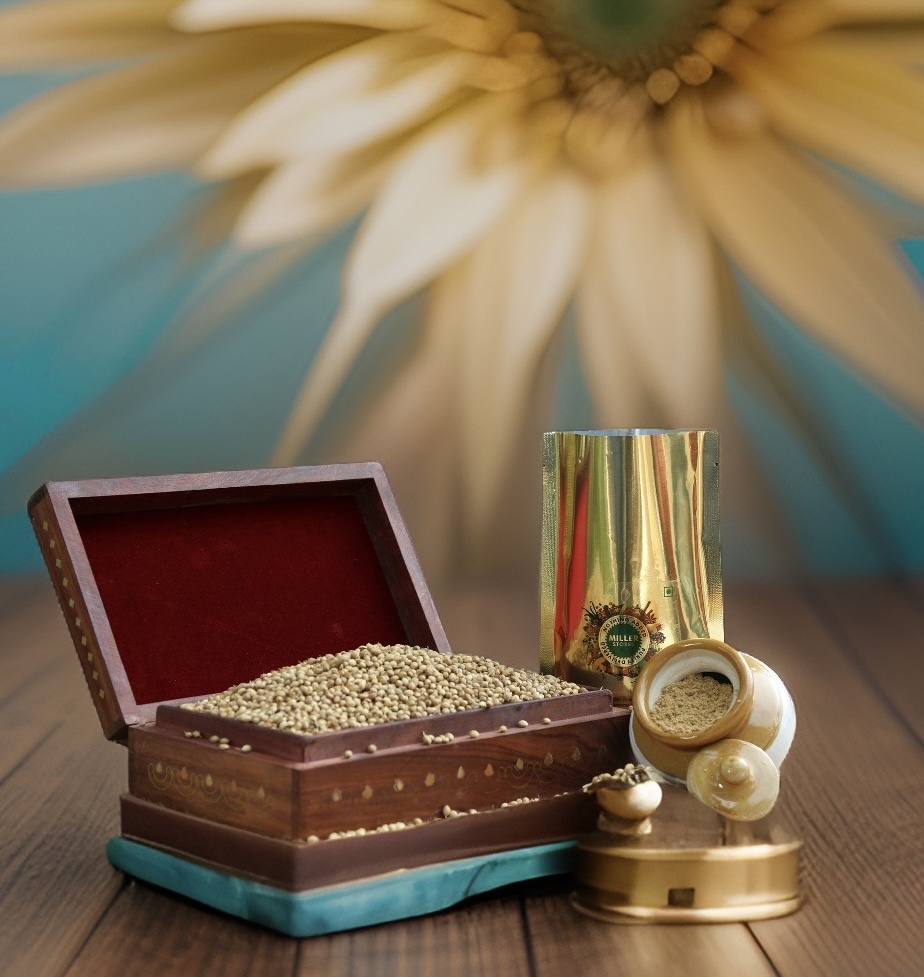
All three of the powders discussed here are milled to order at our counter and shipped across India:
- Premium Kashmiri Chilli Powder — milled from whole Kashmiri pods, no added colour or anti-caking agent.
- Lakadong Turmeric Powder — single-origin Meghalaya turmeric, high curcumin, milled at the counter.
- Brown Coriander Powder — whole seed ground to order, no husk filler.
Browse the rest of our Freshly Milled Spices range for the rest of the counter-milled lineup.
Frequently asked questions
How long does ground chilli powder stay fresh?
For full aroma, plan on about three to four months once it's ground, stored airtight and away from heat and light. It doesn't turn unsafe after that — the colour and pungency simply fade, so older powder tastes milder and duller rather than "gone off."
How long does turmeric powder last before it goes flat?
Around four to six months for full aroma when freshly milled and stored airtight, cool and dark. Turmeric's colour holds up considerably longer than its aroma, so a jar can look perfectly vivid while tasting of very little.
How long does ground coriander powder stay fresh?
About three to four months for full aroma. Coriander's volatile citrus-floral oil is one of the more delicate ones among common spices, so it's worth buying in a smaller quantity you'll actually finish.
Is it safe to use spice powder after its peak-flavour window?
Generally yes — going past the window makes a spice weaker-tasting, not unsafe, and it isn't a medical risk to keep using it. The real safety flag is moisture: visible mould, caking or a musty smell mean the jar should be discarded regardless of age.
Why does my spice powder clump — is that a sign it's gone bad?
Not necessarily. Freshly milled powder with no anti-caking agent naturally absorbs a little ambient humidity and can clump; breaking it up with a dry spoon is usually enough. Clumping only signals a problem if it comes with a musty smell or visible mould.
Should I store spice powder in the fridge to make it last longer?
No — keep it in a cool, dark cupboard instead. Moving a cold container in and out of a warm kitchen causes condensation inside the jar, and that dampness is exactly the condition that lets mould take hold.
Does buying whole spice and grinding at home last longer than buying it ready-ground?
Yes. Whole chilli, turmeric and coriander keep their aromatic oils and pigments far longer than the powder made from them, because grinding exposes far more surface area to air, light and heat. That's the reasoning behind milling to order rather than stocking pre-ground powder.
What's the difference between a spice going "stale" and going "unsafe"?
Stale means the aroma and pungency have faded with time and exposure to air, light or heat — it's still fine to eat, just less flavourful. Unsafe means visible mould, damp caking or a musty smell, which point to moisture getting into the container; that's a discard, not a "use a bit extra" situation.
Sources
- e-PG Pathshala (UGC/MHRD, INFLIBNET), Food Technology: Grinding Methods, Module 33. epgp.inflibnet.ac.in
- Texas A&M AgriLife Extension, Storing Dried Herbs & Spices (Family and Community Health, Castro County). agrilifeextension.tamu.edu
- Norris, J.A. and Dahl, W. (2013). Shopping for Health: Herbs and Spices, FSHN13-03. University of Florida IFAS Extension (EDIS). journals.flvc.org/edis
- Kumar, K.S. et al. (2012). Influence of vacuum packaging and long term storage on quality of whole chilli (Capsicum annuum L.), Journal of Food Science and Technology. pmc.ncbi.nlm.nih.gov
- Relationship of Quality Parameters with Time during Storage of Turmeric, Journal of Agricultural Engineering, ICAR. epubs.icar.org.in
- FSSAI, Guidance Document on Food Safety Management System for Spice Processing (23 October 2018). fssai.gov.in
These are general storage and food-safety guidelines, not a substitute for your own senses: when in doubt, judge a specific jar of spice by smell, look and feel — visible mould, damp caking or a musty odour — rather than by a date alone.
Last updated 30 September 2026.