A Kottayam fish curry masala is almost all chilli: about 2 tablespoons for 500 g of fish, with kudampuli for sourness and no coconut. Malabar fish curry is milder and built on ground coconut, using about 1 tablespoon of chilli, more coriander and 1/2 cup of coconut. Kottayam is fiery and red. Malabar is creamy and orange.
Key takeaways
- The souring agent defines Kottayam curry. Kudampuli is the dried rind of Garcinia gummi-gutta, a tree native to the Western Ghats [1].
- Kottayam masala is mostly chilli, with little or no coriander and no coconut. That makes it a thick, red, oily gravy that keeps well.
- Malabar masala uses less chilli and adds coriander and coconut, which makes a thicker, milder, orange-yellow gravy.
- Kashmiri chilli gives the red colour without too much heat. A hotter chilli adds the bite.
What makes a Kottayam fish curry different?
Kottayam fish curry, often called meen vevichathu or kudampuli fish curry, is defined by kudampuli, a lot of chilli and no coconut. Kudampuli, also sold as Malabar tamarind or fish tamarind, is the sun-dried, smoked rind of Garcinia gummi-gutta [1]. It gives a sharp, smoky sourness that ordinary tamarind doesn't.
The curry is traditionally cooked in a clay chatti with coconut oil, shallots, ginger, garlic and curry leaves, then left to rest. Many Kerala families say it tastes better the next day, once the kudampuli and chilli have soaked into the fish.
What makes a Malabar fish curry different?
Malabar fish curry is built on coconut. Grated coconut is ground with chilli, coriander and turmeric into a smooth paste, then simmered with tomato, shallots and a souring agent. Families use tamarind, kudampuli or raw mango, depending on the season and the household. The result is milder and creamier than the Kottayam style, and it is usually eaten the day it is made.
How do the spice ratios compare?
The table shows starting amounts for 500 g of firm fish, such as seer, pomfret, sardine or mackerel. These are common home ratios, not fixed rules, so adjust the chilli to your taste.
| Ingredient | Kottayam style | Malabar style |
|---|---|---|
| Kashmiri chilli powder (colour) | 1 1/2 tbsp | 3/4 tbsp |
| Hot chilli powder (heat) | 1/2 tbsp | 1/4 tbsp |
| Coriander powder | 0 to 1 tsp | 1 1/2 tbsp |
| Turmeric | 1/4 tsp | 1/2 tsp |
| Fenugreek (whole or powder) | 1/4 tsp | A pinch |
| Grated coconut | None | 1/2 cup, ground smooth |
| Souring | 3 to 4 pieces of kudampuli, soaked | Lime-sized tamarind, or 2 pieces of kudampuli |
| Aromatics | 10 shallots, 1 inch ginger, 6 garlic cloves | 8 shallots, 1 tomato, 1 inch ginger |
| Fat | 3 tbsp coconut oil | 2 tbsp coconut oil |
| Tempering | Curry leaves in the base | Mustard, shallot and curry leaves at the end |
The main difference is chilli against coriander and coconut. Kottayam masala is roughly 90% chilli by volume. Malabar masala is closer to one part chilli to two parts coriander, and the coconut carries the rest.
How do you make Kottayam fish curry masala at home?
- Soak 3 to 4 pieces of kudampuli in 1/2 cup of warm water for 15 minutes.
- Heat 3 tablespoons of coconut oil in a clay chatti or heavy pan. Splutter 1/4 teaspoon of fenugreek, then sauté 10 sliced shallots, 1 inch of ginger and 6 garlic cloves with curry leaves until soft.
- Lower the heat. Add 1 1/2 tablespoons of Kashmiri chilli, 1/2 tablespoon of hot chilli and 1/4 teaspoon of turmeric, mixed to a paste with a little water. Fry for 2 to 3 minutes until the oil separates. Don't let it burn.
- Add the kudampuli with its water, 1 cup of water and salt. Bring it to a boil.
- Slide in 500 g of fish. Swirl the pot rather than stirring, and simmer uncovered for 10 to 12 minutes until the gravy thickens and oil rises to the top.
- Finish with a drizzle of raw coconut oil and fresh curry leaves. Rest it for at least 2 hours, or overnight, before serving.
Which one should you cook?
- Cooking a day ahead or for a trip: choose Kottayam style. With no coconut, it keeps better.
- Feeding children or guests who don't like heat: choose Malabar style.
- Pairing with kappa (tapioca) or rice: both work. Kottayam with kappa is the classic.
- Short on time: a ready Kottayam fish masala mix saves you blending the chillies each time.
How is our Kottayam fish masala made?
Our Curry Fish Masala Mix (Kottayam) replaces the chilli, turmeric and fenugreek in the steps above. We add 2 tablespoons of the mix for a curry of about 500 g of fish, fried in the oil after the shallots, ginger and garlic.
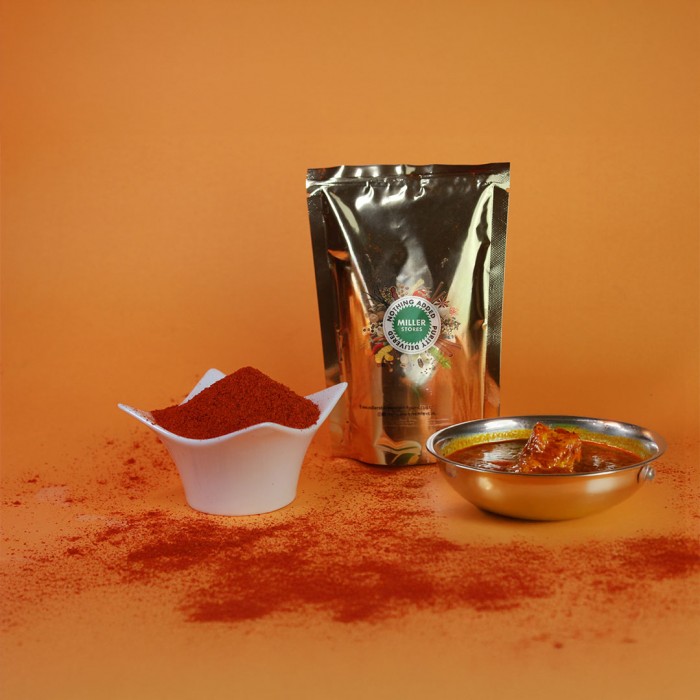
Where to buy Kottayam fish masala and Kashmiri chilli
Use our Curry Fish Masala Mix (Kottayam) for the Kottayam style, and our Kashmiri Chilli Powder for colour without extra heat in either curry. For how chillies differ, read Kashmiri vs Guntur vs Byadgi chilli: which to use when.
Frequently asked questions
What is kudampuli called in English?
Kudampuli is usually sold as Malabar tamarind, fish tamarind or gamboge. It is the dried rind of Garcinia gummi-gutta, a tree native to the Western Ghats [1]. It isn't related to ordinary tamarind, and it gives a smokier, sharper sourness.
Can I use tamarind instead of kudampuli?
Yes, but it changes the dish. Tamarind gives a sweeter, fruitier sourness, which suits a Malabar curry. For the true Kottayam taste, use kudampuli. If you must swap, use a small lime-sized ball of tamarind for 500 g of fish.
Why is Kottayam fish curry better the next day?
Resting lets the kudampuli, chilli and coconut oil soak into the fish and the gravy settle. With no coconut to spoil quickly, the curry holds well overnight in the fridge, which is why many Kerala homes cook it a day ahead.
Which fish is best for Kottayam fish curry?
Firm fish that holds its shape in a long simmer works best: seer (neymeen), pomfret, kingfish, sardine (mathi) or mackerel (ayala). Cut it into thick pieces and swirl the pot rather than stirring.
How do I make the curry less spicy?
Use more Kashmiri chilli and less hot chilli. Kashmiri chilli is chosen for colour, not heat. For a Malabar curry, adding more coconut also softens the heat.
Last updated 30 September 2026.
Sources
- Indian Institute of Science. Garcinia gummi-gutta, India Flora Online herbarium sheet. indiaflora-ces.iisc.ac.in